
v1.58.0
Date: 2025-01-10
Version Introduced: v1.58.0
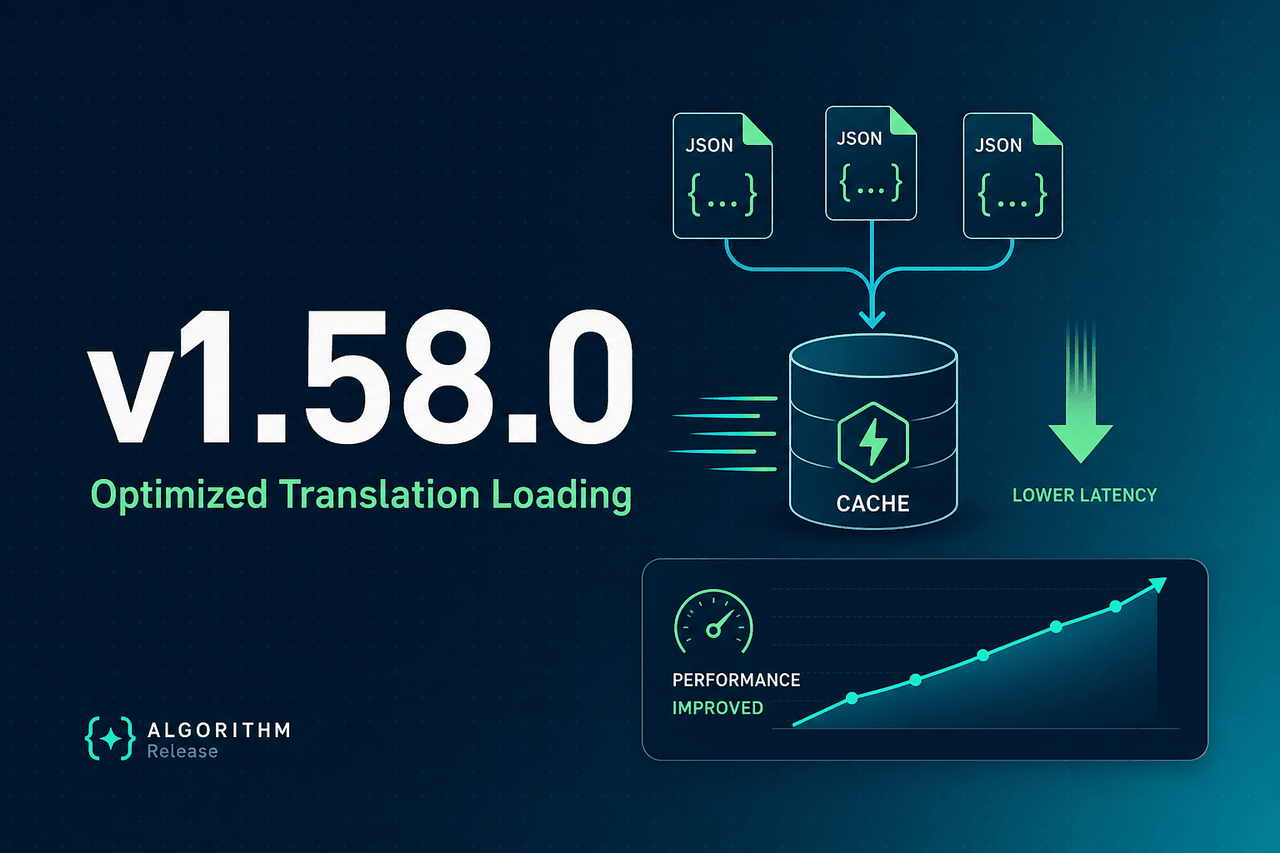
We are thrilled to announce the release of a new algorithm for loading translations in Nuxt I18n Micro. This update introduces significant performance improvements, a cleaner architecture, and more efficient memory usage.
What’s New?
The new translation-loading algorithm focuses on:
- Optimized File Merging: Enhanced the deep merge functionality to handle translations more efficiently.
- Caching Enhancements: Leveraged server storage for pre-rendered translations, reducing redundant computations.
- Streamlined Code: Simplified file paths and structure for better maintainability.
Key Benefits
1. Faster Build Times
The new algorithm reduces build times by efficiently handling translation files and minimizing memory overhead.
- Old Build Time: 7.20 seconds
- New Build Time: 6.91 seconds
- Improvement: 4.03% faster
2. Reduced CPU Usage
Lower maximum and average CPU usage during builds and stress tests:
- Build Max CPU: From 257.60% → 198.20% (23.06% lower)
- Stress Test Avg CPU: From 93.85% → 89.14% (5.01% lower)
3. Lower Memory Usage
Memory consumption has been significantly optimized across builds and runtime stress tests:
- Build Max Memory: From 1286.00 MB → 885.19 MB (31.15% lower)
- Stress Test Max Memory: From 624.22 MB → 429.52 MB (31.20% lower)
4. Enhanced Response Times
Stress test response times saw drastic improvement:
- Average Response Time: From 411.50 ms → 9.30 ms (97.74% faster)
- Max Response Time: From 2723.00 ms → 187.00 ms (93.13% faster)
5. Increased Request Throughput
The new algorithm boosts the number of handled requests per second:
- Requests per Second: From 288.00 → 305.00 (5.90% increase)
Why It’s Important
Localization is essential for global applications, and improving translation-loading performance can have a direct impact on:
- User Experience: Faster response times lead to a smoother user experience.
- Scalability: Lower resource usage allows better handling of high traffic.
- Developer Productivity: Reduced build times and a simplified codebase streamline workflows.
How It Works
- Efficient Deep Merging
- The algorithm has been rewritten to handle translation merging more intelligently, ensuring minimal memory overhead and faster operations.
- Smart Caching
- Server-side storage is now used to cache translations during pre-rendering, which are then reused during runtime. This avoids repetitive reads and merges.
- Streamlined File Loading
- Translation files are loaded in a more predictable and maintainable way by unifying fallback handling and caching.